
Coconino County VINE Participation
Start with what VINE actually is. It is a victim-information and notification system, and VINELink is the public web face of it. Agencies that join send custody data to it, which lets you search for one named person and, in some places, sign up for alerts about release, transfer, or another status change. It was never meant to serve as a general arrest gallery.
The Arizona Criminal Justice Commission's 2025 VINE impact report names every participating county. Coconino County is not on that list. Flagstaff Police shows up only under "CommunityConnect Only," a city-run program, and that entry does not mean either Coconino detention facility feeds live booking data to VINE.
That gap shapes the whole lookup path. Skip the web search and call instead. The Flagstaff jail answers at 928-226-5200, and the Page holding facility takes calls at 928-645-8873. The official jail FAQ states plainly that inmates are not listed on the county website and sends all custody questions to the phone channel.
How a VINELink Check Works
The standard VINELink workflow still matters wherever the local jail or corrections agency takes part. You search for one person, narrow down the possible matches, and check which agency supplied each result before trusting it. For a Coconino arrest, though, run the process with county coverage clearly unestablished in mind.
- Open VINELink and choose Arizona as the service area.
- Enter the person's name or an identifying number when available. Use only details already known through a lawful personal or case-related purpose.
- Compare multiple matches carefully. Check the reporting agency, facility, identifier, and status rather than choosing a similar name.
- Open the record and note when its source agency last supplied information. Do not treat a displayed status as a court outcome.
- For Coconino County, call Flagstaff or Page detention even if the search is blank.
The VINELink site itself is simply the entry point for the service, and it displays no custody photos of any individual.
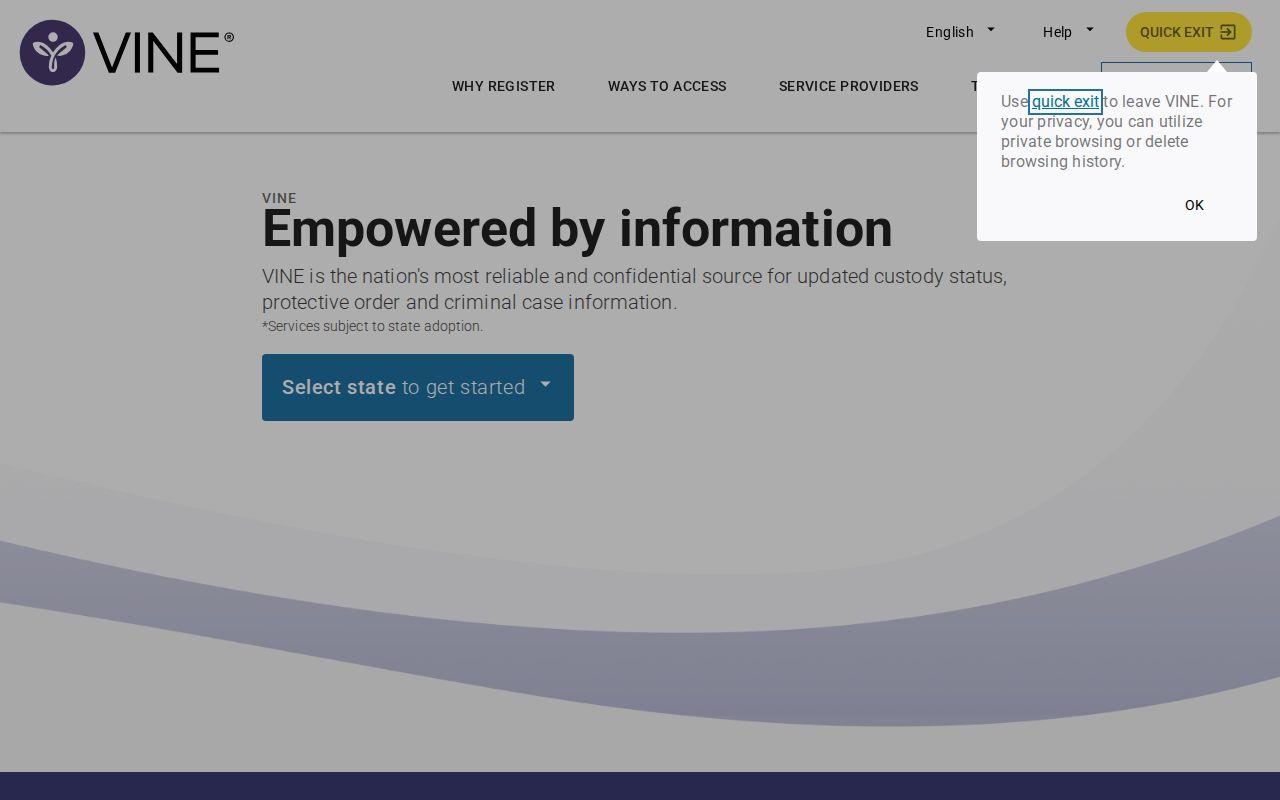
VINELink only works with what agencies supply. No participation means no results, so Coconino County's absence from the state deployment list is a hard wall for this route.
For the county booking record itself, turn to the Coconino County recent-arrests resource and its Records and court channels. Even where VINE is active, it reports custody status only, not the full arrest report.
What VINELink Custody Results Mean
What shows up in a result depends on the agency behind it. VINE workflow materials describe booking data flowing into the system to support anonymous search and notification. A result can help you follow custody. It is not a booking-photo source, though, and it is not a full criminal case file.
| Possible result field | What it can establish | Key limit |
|---|---|---|
| Name or identifier | The agency's record match | Confirm identity; similar names occur |
| Custody status | Status supplied by a participating agency | Updates can lag a fresh event |
| Facility | Reported holding location | Transfers can occur after the update |
| Agency | Source that supplies the record | Not all Arizona counties participate |
| Notification options | Available registration channels | An alert is not a court notice |
| Release or transfer event | A custody change reported to VINE | Does not resolve the criminal case |
Custody status tells you where a person is held or whether the reporting agency logged a release. Release does not mean charges were dropped. Transfer does not mean a sentence was handed down. For arraignment dates, hearings, and the rest of the case, the court docket is the separate path that actually carries those details.
Registering VINELink Custody Alerts
Where an agency does participate, VINE materials describe several ways to register: by telephone, through VINELink, in the app, by text, email, or TTY. What is offered varies by place. Attach the registration to the exact record, and only after checking identity and agency.
- Select the notification or registration control on the matched record.
- Choose an offered delivery method, such as phone, text, email, TTY, or an in-app notice.
- Enter and confirm the contact destination. Follow the service prompts for verification.
- Create or retain the required PIN when the chosen channel uses one. The PIN can protect or confirm notification access.
- Record the agency and person identifier so a later alert can be matched to the correct registration.
Notification is free under the VINE model described in the Arizona materials. Even so, keep direct contact with the agency when timing is critical. A blocked text, missed call, full inbox, wrong address, or data delay can stop an alert from arriving.
Coconino County's non-listed status means none of this can be promised for a county jail booking. These steps apply only if VINELink actually returns a record from a participating source. And never register against a similar name in a different county to fill the gap.
An alert works best alongside a human plan. Save the detention numbers, the person's known details, any case number, and the court contact. Check that voicemail and email settings will let notices through. Where safety planning is involved, follow the victim-services program or responsible agency rather than leaning on one automated message.
Registration sticks to one record. If a person transfers into a system using a different identifier, confirm the old alert still applies. One agency's "released" can be followed by transfer to another custodian, so read that word with the reporting agency and time in mind. It may cover release from that facility alone.
Coconino VINELink Limits and Verification
Even in a working system, fresh booking data can lag. Coconino carries a more basic problem: state reporting does not identify it as a VINE county at all. Start any confirmation with detention, not a web result. Flagstaff is the main regional jail. Page handles short-term northern holding, and people move between the two.
Dial 928-226-5200 for Flagstaff and 928-645-8873 for Page. When you need paper, the consolidated Flagstaff Police and Coconino Sheriff Records program handles arrest and jail-booking requests. Its online report request covers reports, photographs, body-worn camera footage, 911 audio, jail video, and more. Records staff may ask for ID, apply redactions, or charge current fees.
The Coconino County 24 Hour Arrests page lays out the same-day phone sequence with local caveats. That route fits a fresh county arrest, not ongoing alerts.
Flagstaff Alerts Are Not VINELink
Flagstaff Police runs its own Victim Information Portal, and it should not be confused with VINELink. This is a local case-notification service for people with a qualifying case number and verified contact details. Updates go out by email or text message. Expect a lag of up to 48 hours before an update appears. The official Flagstaff case-status source shows the form itself, which makes the difference easy to see. Nothing here works as an anonymous jail lookup for Coconino County.
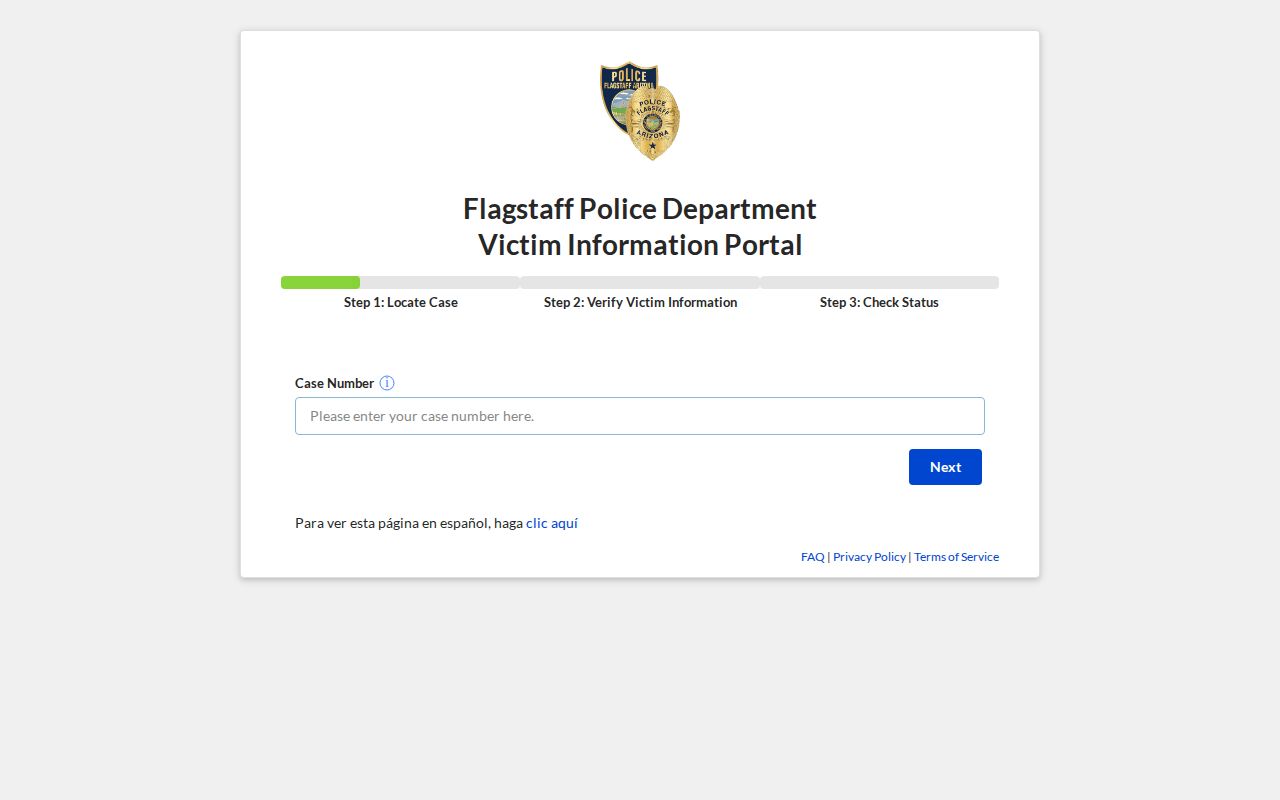
These two systems answer different questions. The Flagstaff form works from a single case plus verified contact information, while VINELink runs on custody records that participating agencies feed into it.
So don't lean on the Flagstaff portal to guess whether someone sits in Page, Williams, Sheriff, state-prison, or federal custody. Silence there means nothing changed? No. A lag is just a lag. The program that holds the record you need is the one to ask.
Coconino Custody Systems Stay Separate
Coconino County's lookup tools stop at the jail door. Once a judge sends someone to Arizona state prison, the county pretrial path no longer applies. For that population, the Arizona Department of Corrections, Rehabilitation and Reentry Inmate Data Search is the right tool, and it tracks prison custody rather than a Coconino County jail booking. ADCRR itself cautions that certain release dates and release types in its data are unverified and unaudited.
Federal custody sits outside VINELink's county function too. The Federal Bureau of Prisons locator generally reaches people in BOP custody from 1982 forward. ICE runs a separate detainee locator that needs an A-number or an exact biographical match with country of birth. The U.S. Marshals Service posts no public inmate roster, so pretrial federal custody may mean contacting the custodian, the court, an attorney, or using a lawful records process.
| Custody stage | Coconino-area channel |
|---|---|
| Fresh county booking | Flagstaff or Page detention phone |
| Historical county booking record | Consolidated Police/Sheriff Records |
| Participating VINE record | VINELink search and alerts |
| Arizona state sentence | ADCRR Inmate Data Search |
| Federal sentence | BOP locator |
| ICE custody | ICE Online Detainee Locator |
Coconino Arrest Status Is Not Guilt
VINE and detention data track custody events, nothing more. A booking charge can be amended, reduced, dismissed, or resolved at court.
For what happens after an arrest, court records carry the story. The Arizona Public Access Case Lookup can show later case data, though it updates weekly and excludes protected or sealed categories. Coconino County eAccess covers eligible Superior Court cases. The court holding the file has the final word on disposition.
Keep alerts in their proper role. A release notification tells a registered person that custody status changed. It does not erase the arrest record, dismiss a case, or impose a sentence. Confirm urgent details with the named agency, save the alert's date, time, and source, and check again when facts change.